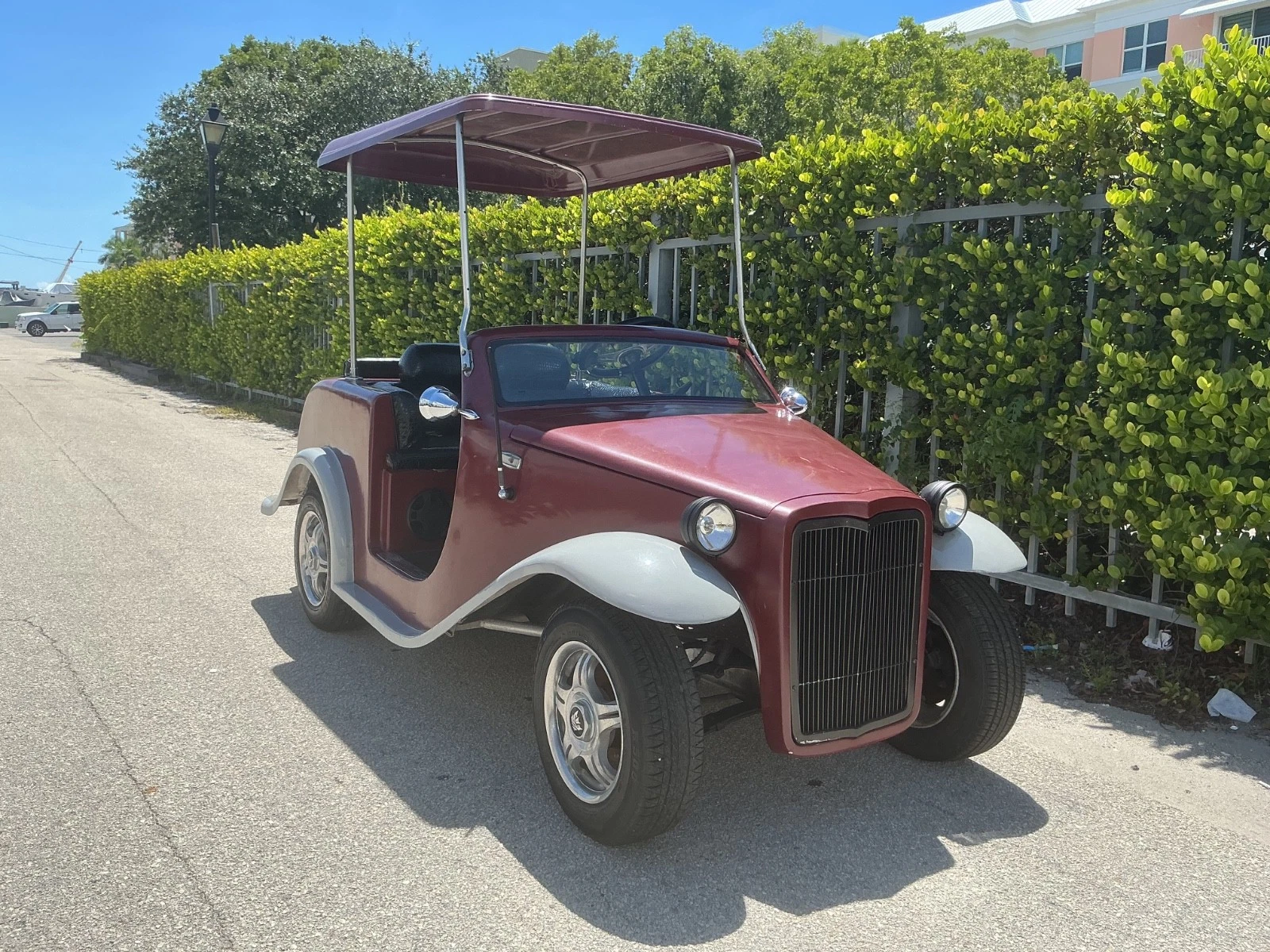
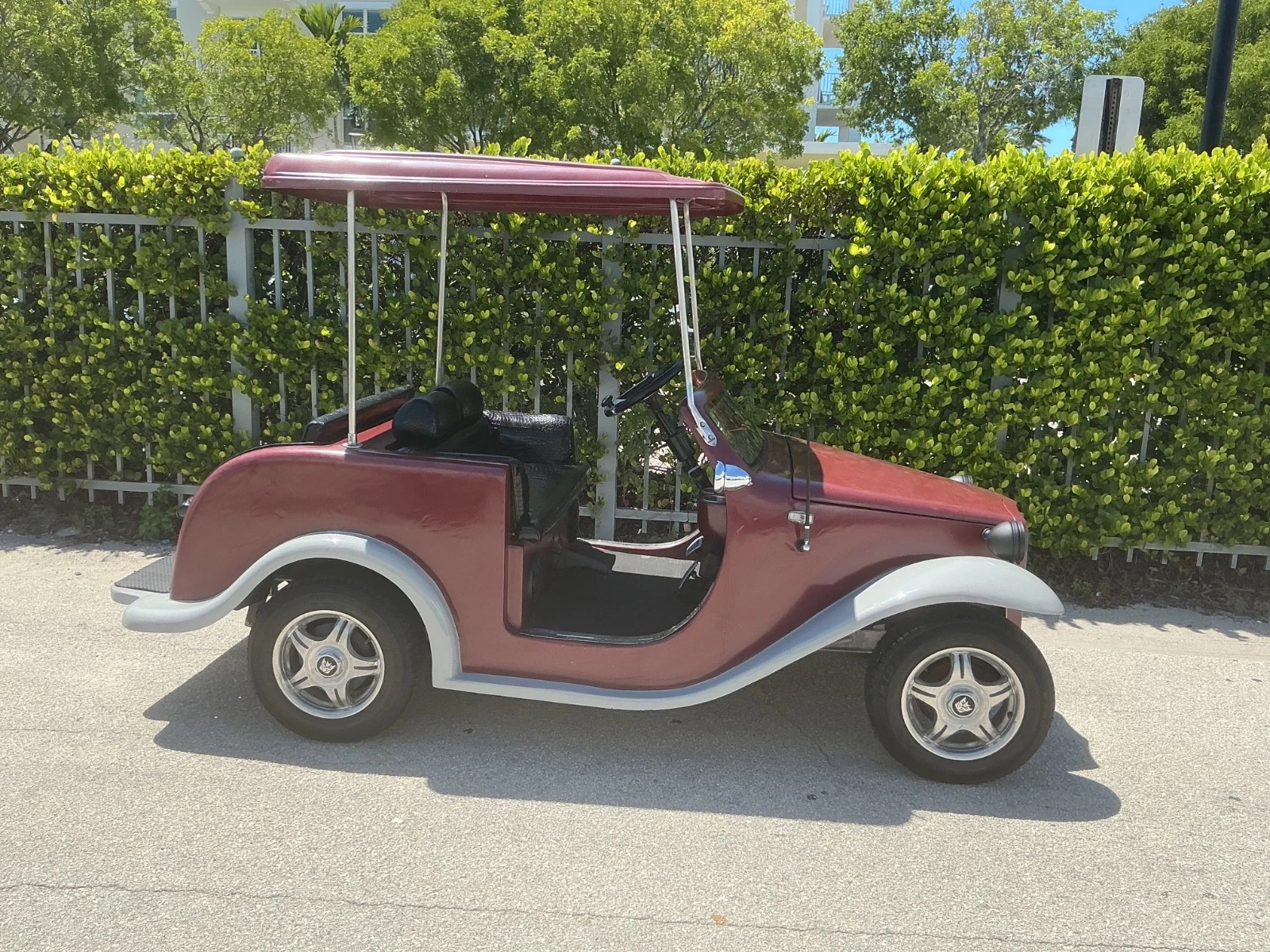
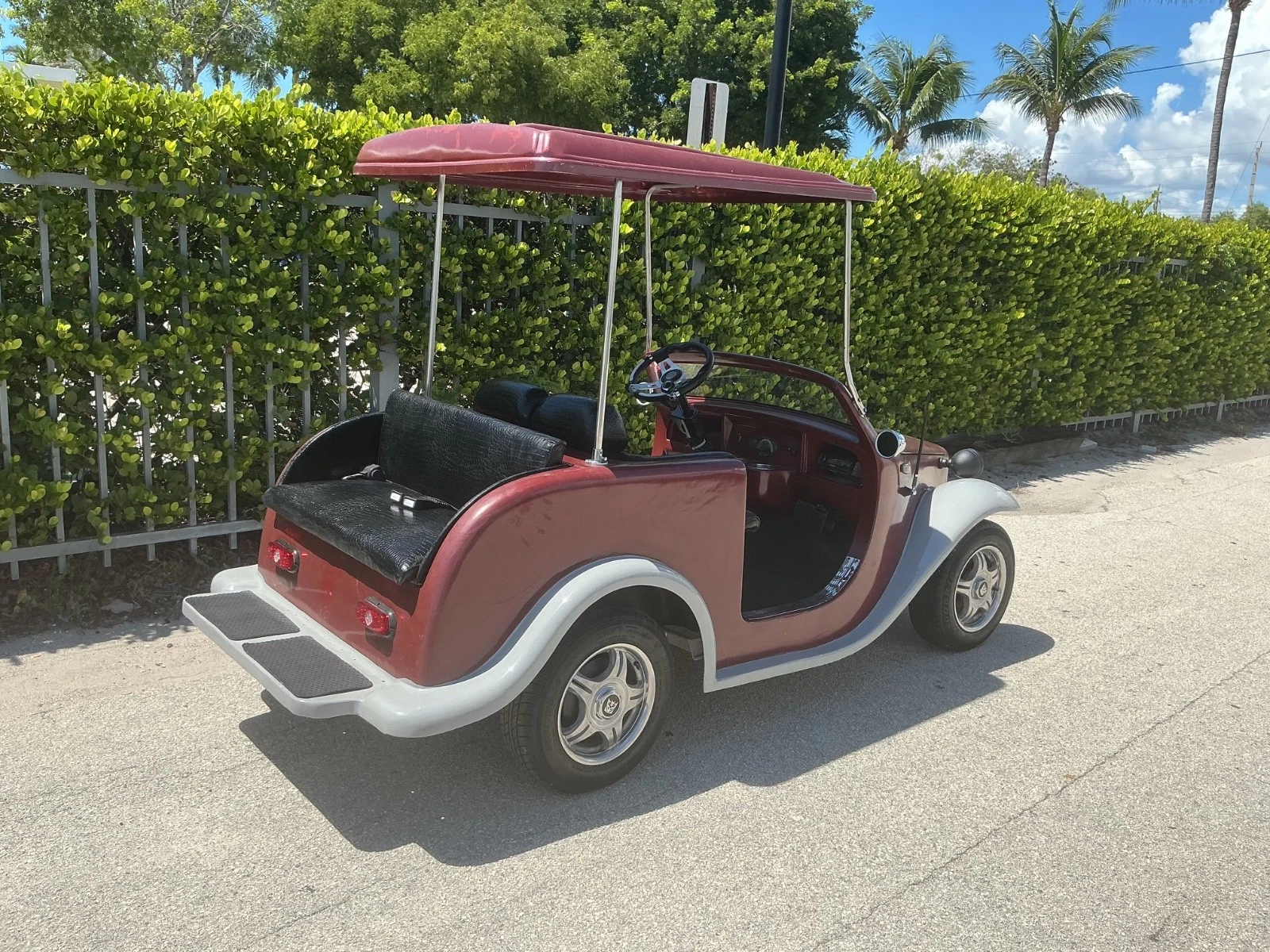
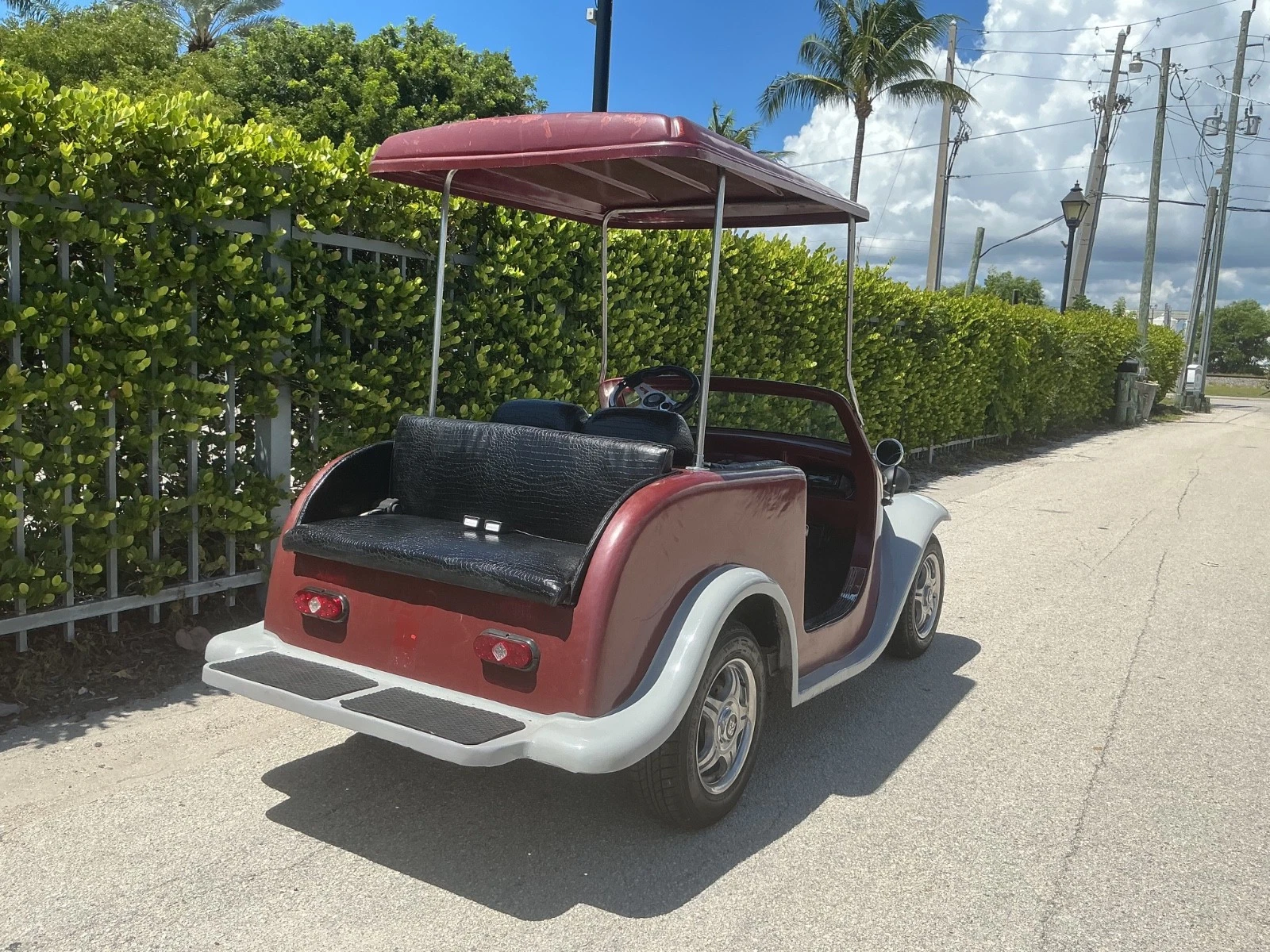
Description
Introduction
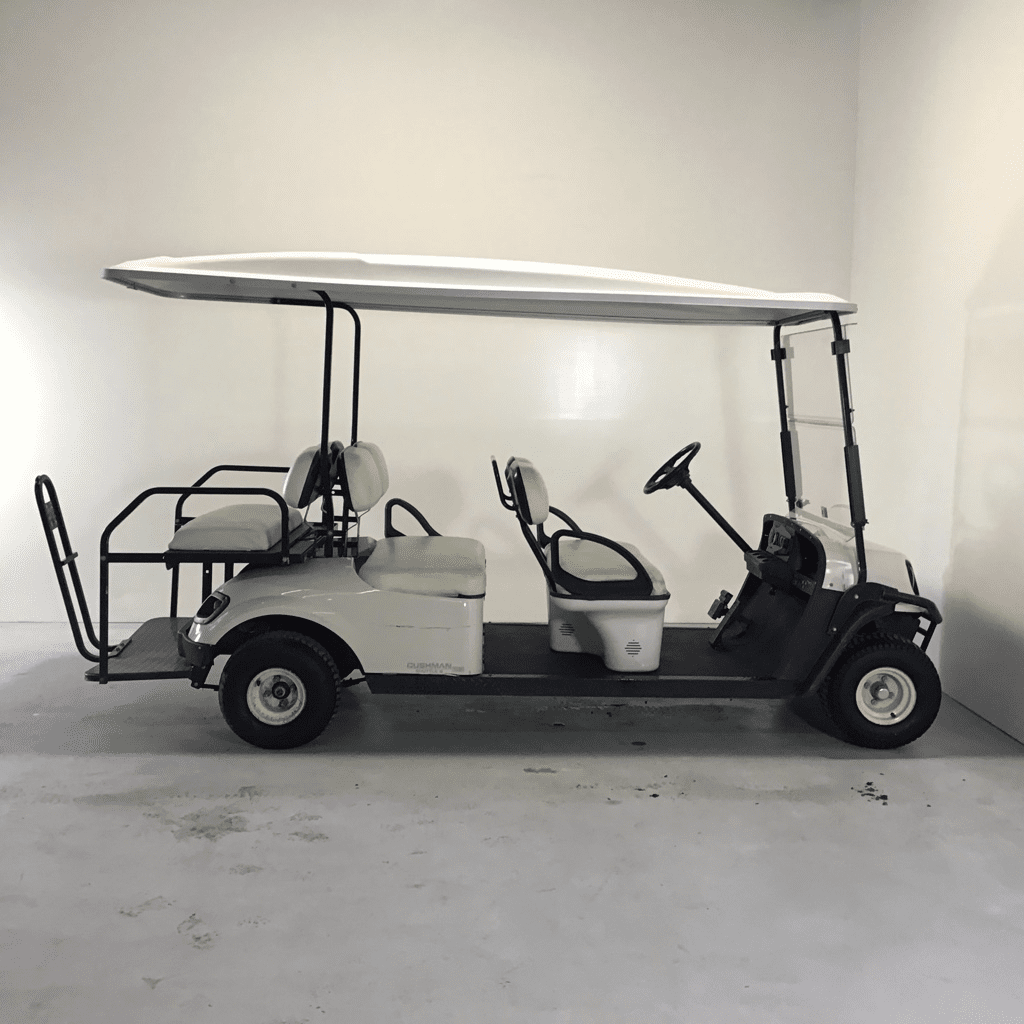
California roadster golf cart 2004 has few vehicles occupy as unique a niche as the golf cart. For decades, these utilitarian vehicles were strictly functional—designed to carry golfers and their clubs silently across manicured fairways. However, the turn of the 21st century saw a cultural shift. Golf carts began escaping the boundaries of the country club, finding new life as neighborhood electric vehicles (NEVs) in retirement communities, coastal towns, and sprawling residential developments. This evolution from pure utility to lifestyle accessory created a demand for vehicles that offered more than just transportation; they needed personality.
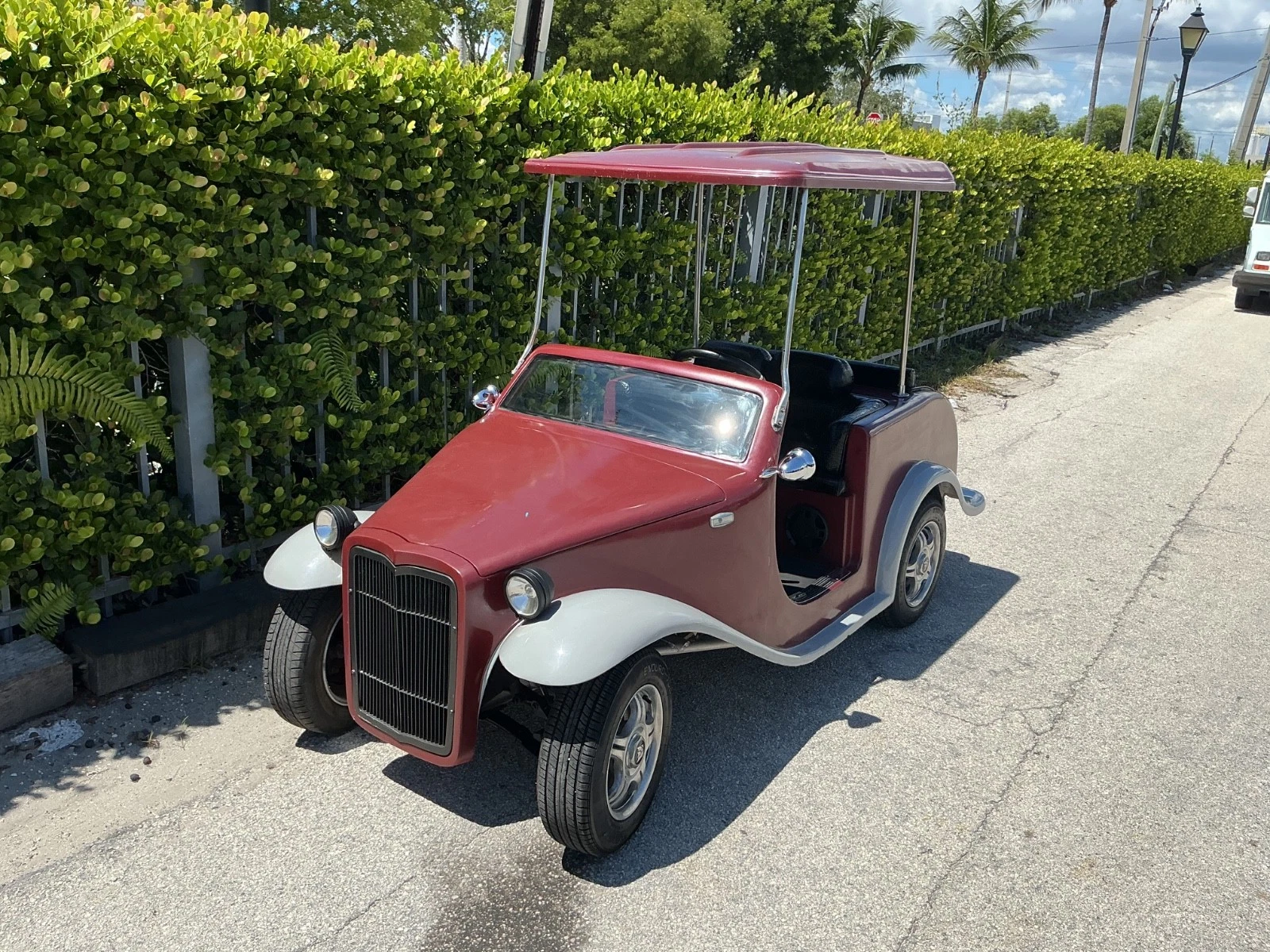
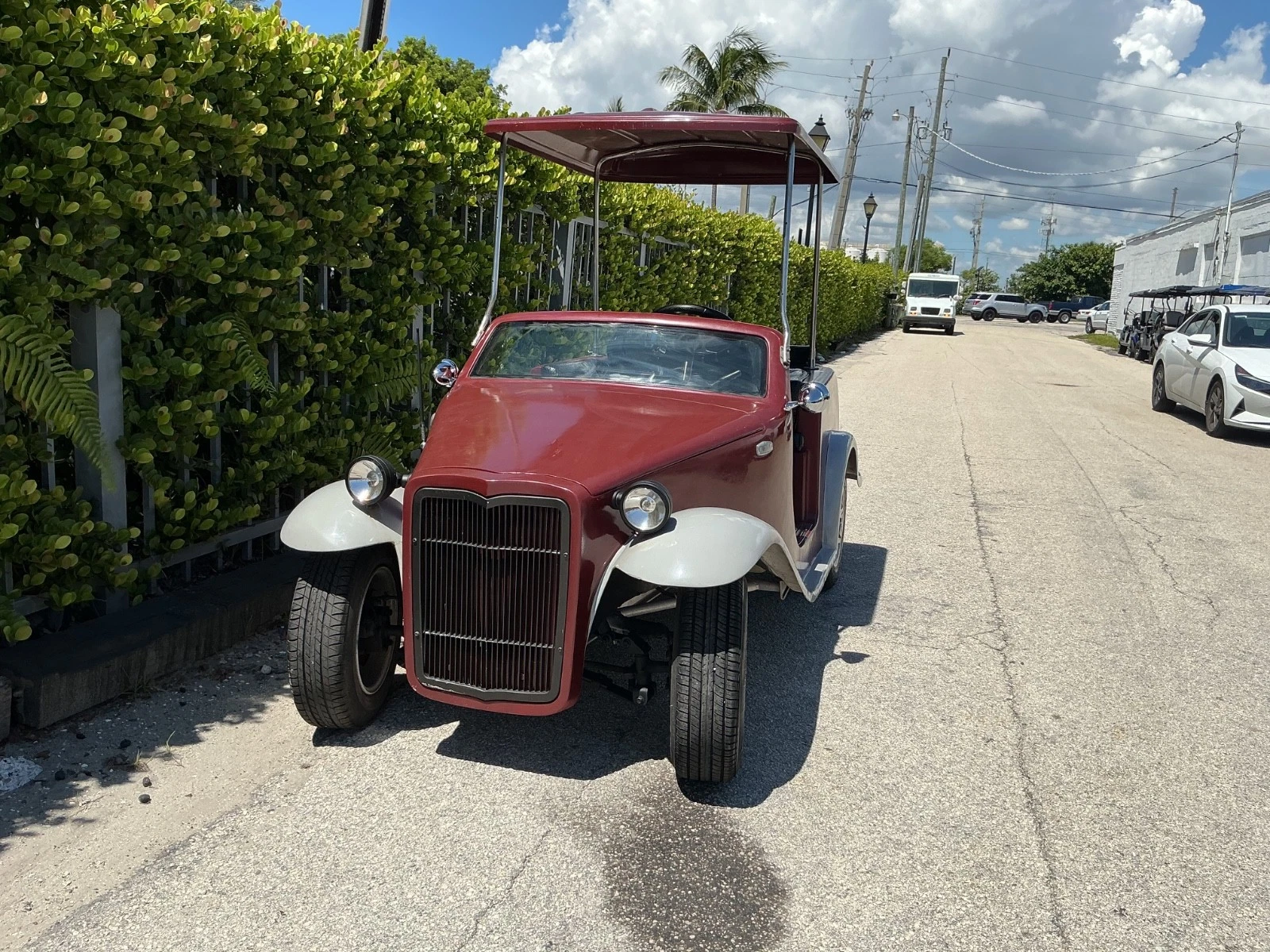
Enter the California Roadster. By 2004, this vehicle had established itself as the preeminent choice for those who wanted to combine the practicality of an electric golf cart with the romantic nostalgia of a bygone automotive era. With its elongated hood, exposed side pipes, and polished chrome accents, the California Roadster was not merely a cart; it was a statement. It evoked the spirit of the classic 1920s and 1930s American speedster, a time when automobiles were transitioning from novel contraptions to symbols of freedom and style.
This comprehensive analysis delves into the 2004 California Roadster, exploring its origins, design philosophy, technical specifications, ownership experience, and its lasting impact on the personal transportation vehicle market. We will dissect what made this particular model year a benchmark for vintage-style electric vehicles and why it remains a coveted collector’s item nearly two decades later.
Key Specifications
General Information : california roadster golf cart
Model Year: 2004
Manufacturer: California Roadster (often built on a Columbia/Pargo or E-Z-GO chassis)
Type: 2-Passenger (Optional 4-Passenger)
Body Material: Fiberglass
Color: Typically Red, Yellow, or Cream (Custom paint schemes were common)
Drivetrain & Electrical
Motor: 3-5 HP (approx.) 36V or 48V DC Electric Motor (Depending on specific configuration)
Battery Configuration: (6) 6-Volt Deep Cycle Batteries (for 36V systems)
Charger: Onboard or off-board automatic charger
Controller: Solid-state motor speed controller
Propulsion: Direct drive rear axle
Performance
Speed: 12–14 mph (Standard mode) / up to 19–22 mph (With speed code/high-speed motor)
Range: Up to 30–40 miles on a full charge (Depending on battery condition and terrain)
Suspension & Brakes
Front Suspension: Leaf spring or independent coil spring (Varies by base chassis)
Rear Suspension: Leaf spring
Brakes: Rear mechanical drum brakes
Parking Brake: Foot-actuated or hand lever
Dimensions & Weight
Length: Approx. 120 inches
Width: Approx. 48 inches
Height: Approx. 70 inches (with canvas top)
Weight: Approx. 600–700 lbs (without batteries)
Features & Styling
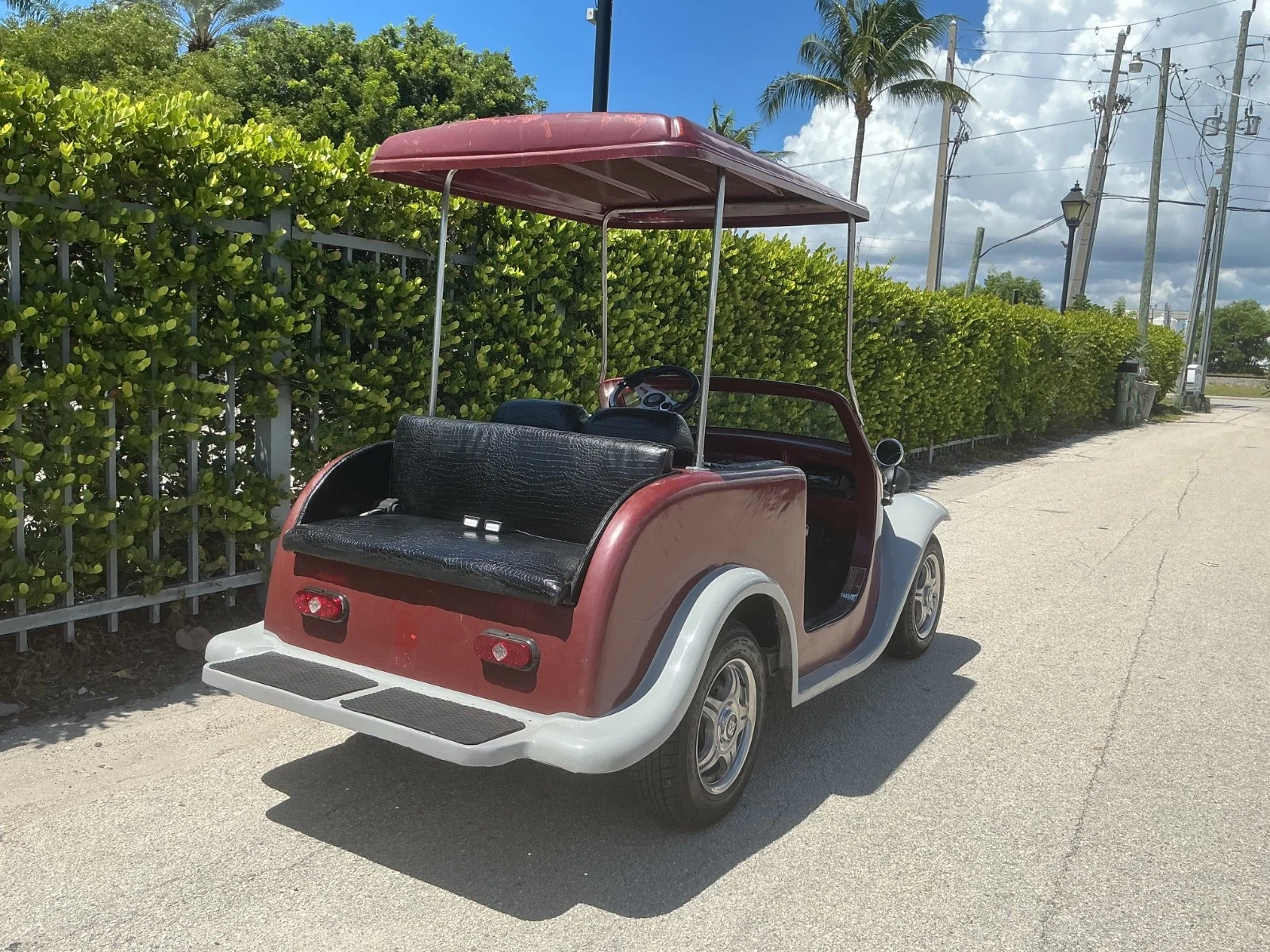
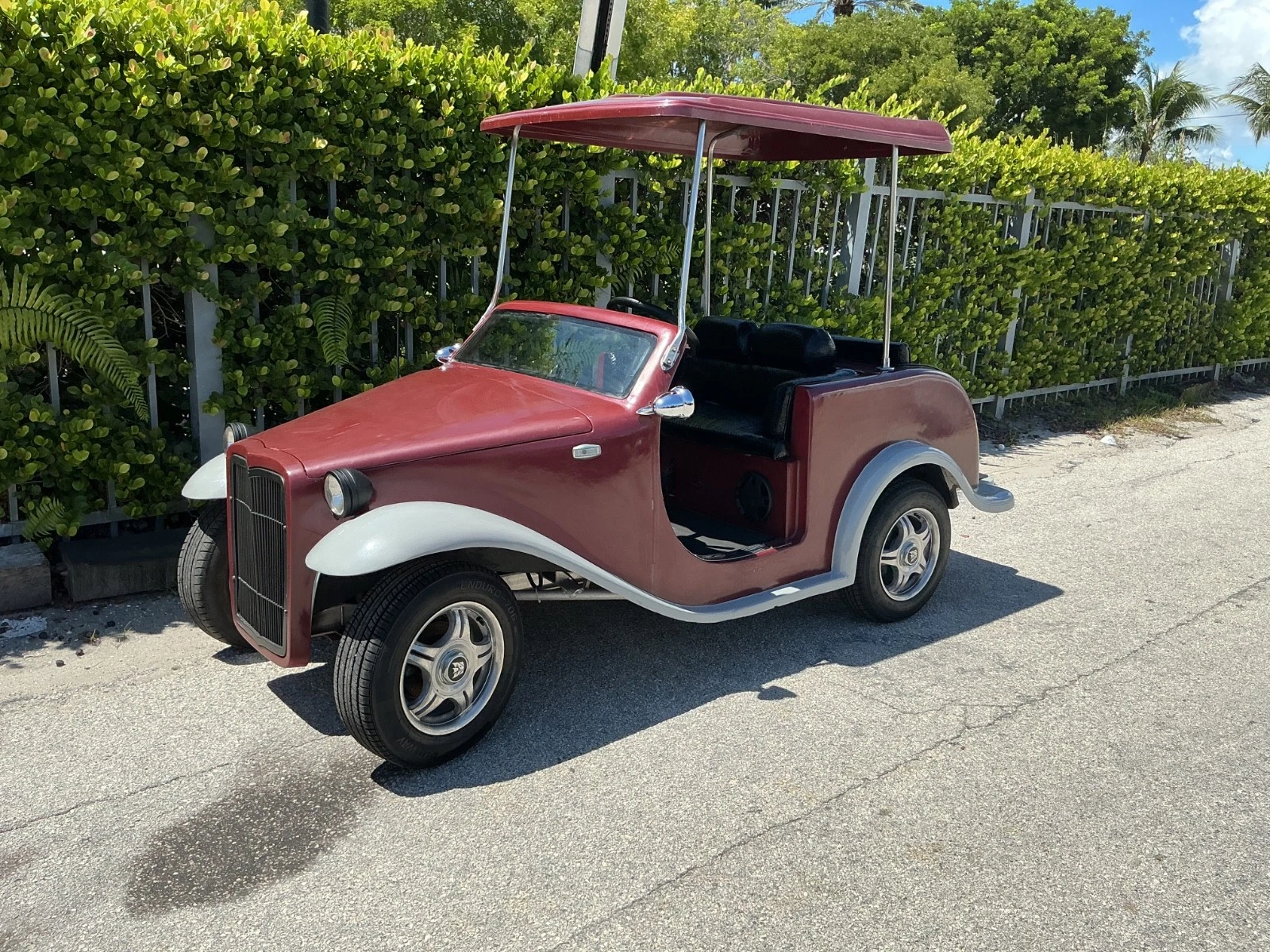
Exterior: Distinctive long hood, “exposed” side pipes (non-functional), chrome-finished grille, headlights, and taillights.
Wheels: Chrome spoke wheels with whitewall tires.
Top: Standard canvas folding convertible top with matching boot cover.
Windshield: Folding acrylic windshield.
Steering: Tilt-away steering wheel for easy entry.
Instruments: Battery state of charge meter.
Form and Function – california roadster golf cart
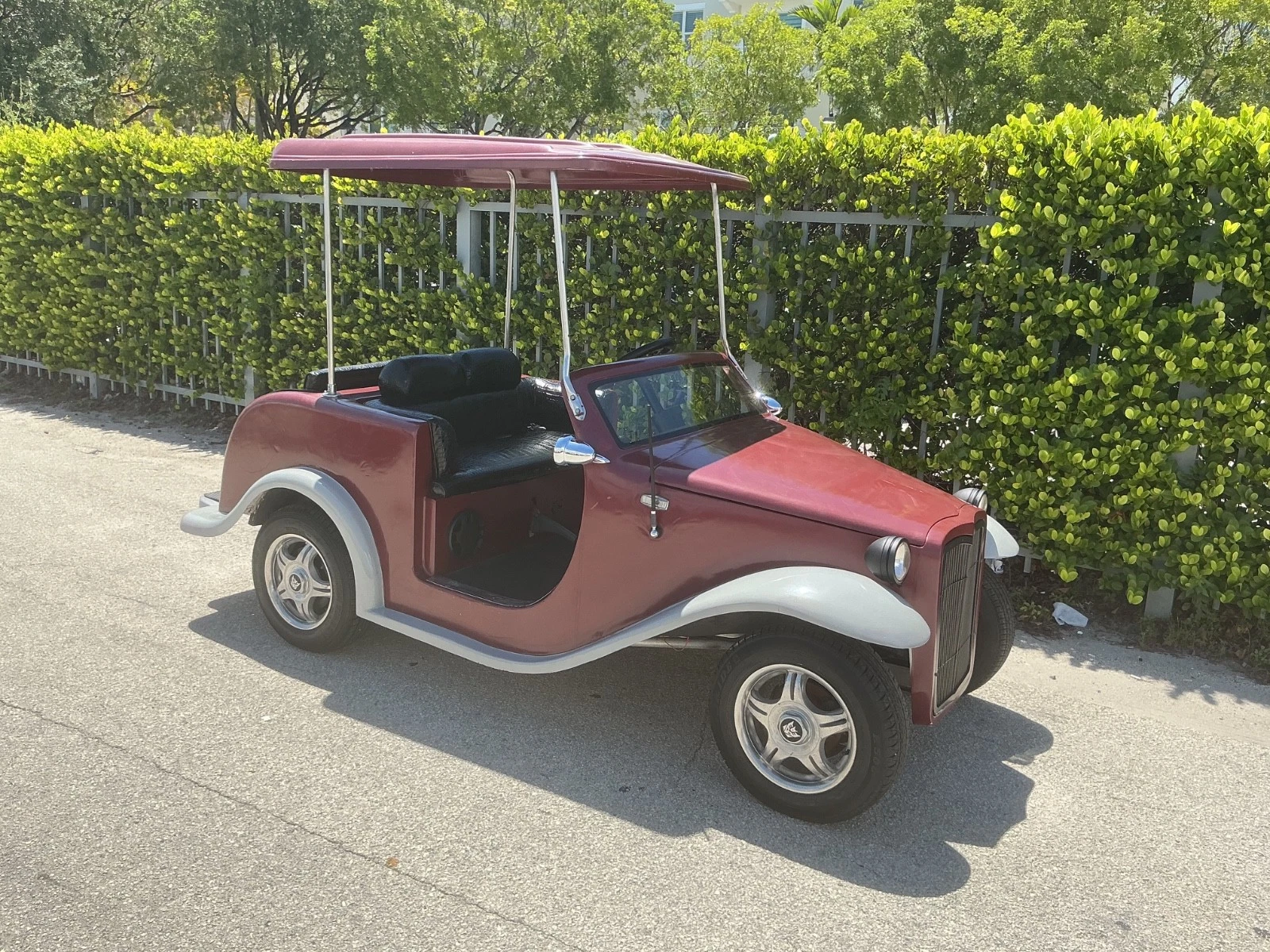
The defining characteristic of the 2004 California Roadster is its bodywork. It is a masterclass in automotive pastiche, blending elements from several classic eras into a cohesive and charming whole.
The Fiberglass Body
The body is constructed from hand-laid fiberglass, a material choice that offers several advantages. It is lightweight, which helps maximize the range of the electric motor. It is incredibly durable and resistant to the dents and dings that plague steel-bodied vehicles in tight golf cart traffic. Most importantly, fiberglass can be molded into complex, flowing shapes that would be prohibitively expensive to stamp in metal. The material allowed the designers to create deep crown fenders, flowing running boards, and a dramatically tapered tail.
The Signature Long Hood
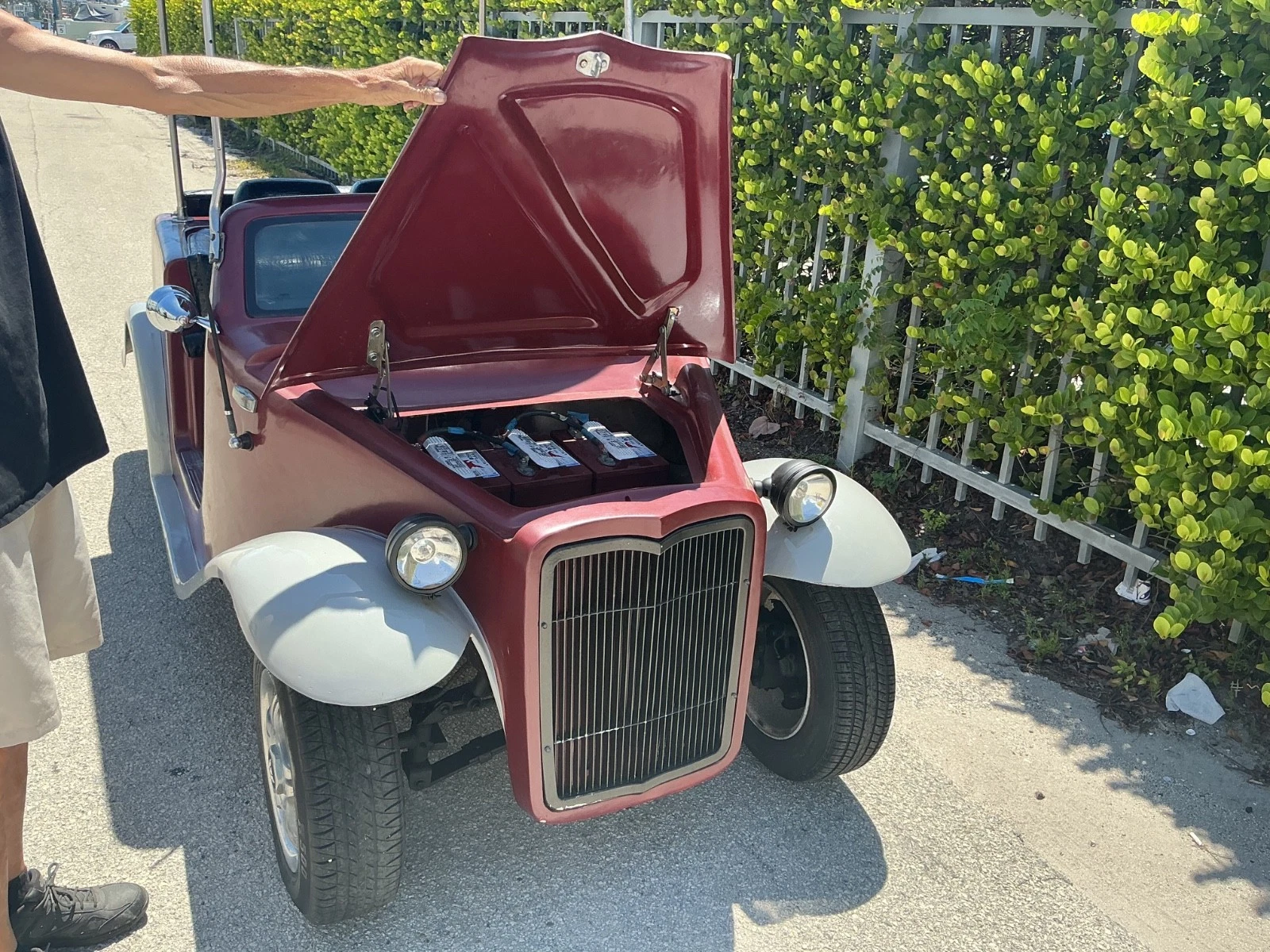
The most striking feature is the disproportionately long hood. In classic speedsters like the 1929 Ford Model A roadster, a long hood was necessary to accommodate a large, inline internal combustion engine. On the California Roadster, this hood is mostly for show. Underneath lies the battery bank. By stretching the hood, the designers created a visual anchor for the entire vehicle. It gives the cart a sense of motion even when standing still, suggesting the power and grace of a pre-war race car. The hood is often secured with leather or chrome straps, a meticulous detail that reinforces the vintage theme.
The Iconic Side Pipes
Coursing along the side of the body are the famous “exhaust” pipes. On a traditional hot rod, these pipes would channel roaring, high-compression V8 exhaust. On the 2004 electric California Roadster, they are purely aesthetic. However, they are not mere plastic appendages. They are typically constructed from polished stainless steel or chrome-plated tubing and are fully functional as stylish running boards. They serve as the perfect visual cue, bridging the gap between the body and the whitewall tires, and are often the first detail admirers notice.
Front-End Styling
The front fascia is a work of art. A chrome-plated grille, often inspired by the classic “Veed” grille of a 1932 Ford or a Packard, dominates the front. Flanking the grille are large, round, chrome-bezeled headlights—fully functional and meeting NEV safety standards. A small, hood-mounted windshield—a “fly screen”—is sometimes present, adding another layer of period-correct detail. The front bumper is a simple, heavy-gauge chrome or stainless steel bar, curved to follow the shape of the body.
The Convertible Top
The 2004 model features a folding convertible top made from durable marine-grade canvas or vinyl. When raised, it provides shade and protection from the elements, fastening securely to the wraparound windshield frame. When the sun is out, the top folds down neatly and is often covered with a matching vinyl boot, cleaning up the profile and completing the open-air roadster experience. The folding mechanism is simple and mechanical, reflecting the no-nonsense engineering of the cars it emulates.
Interior and Cockpit
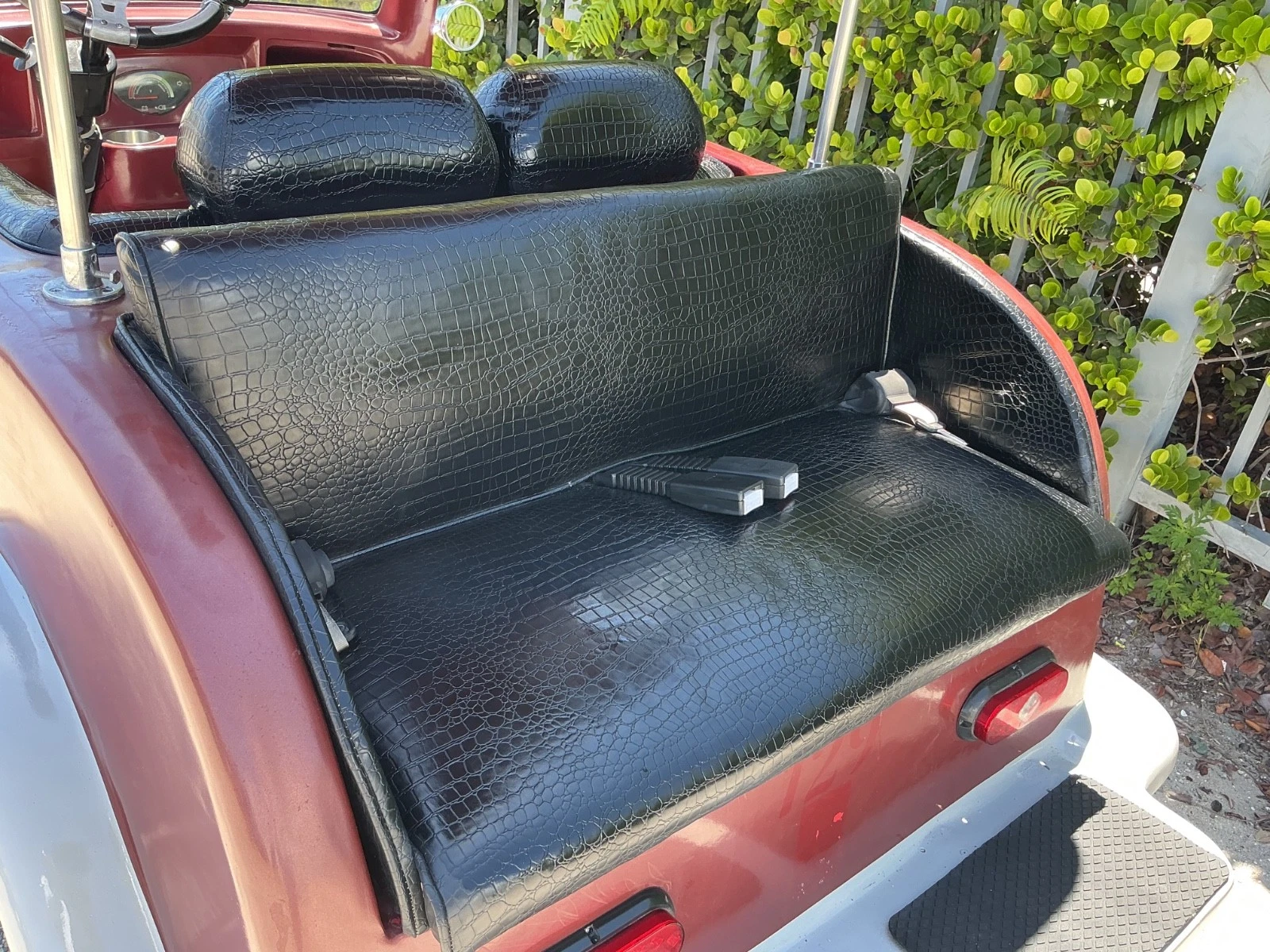
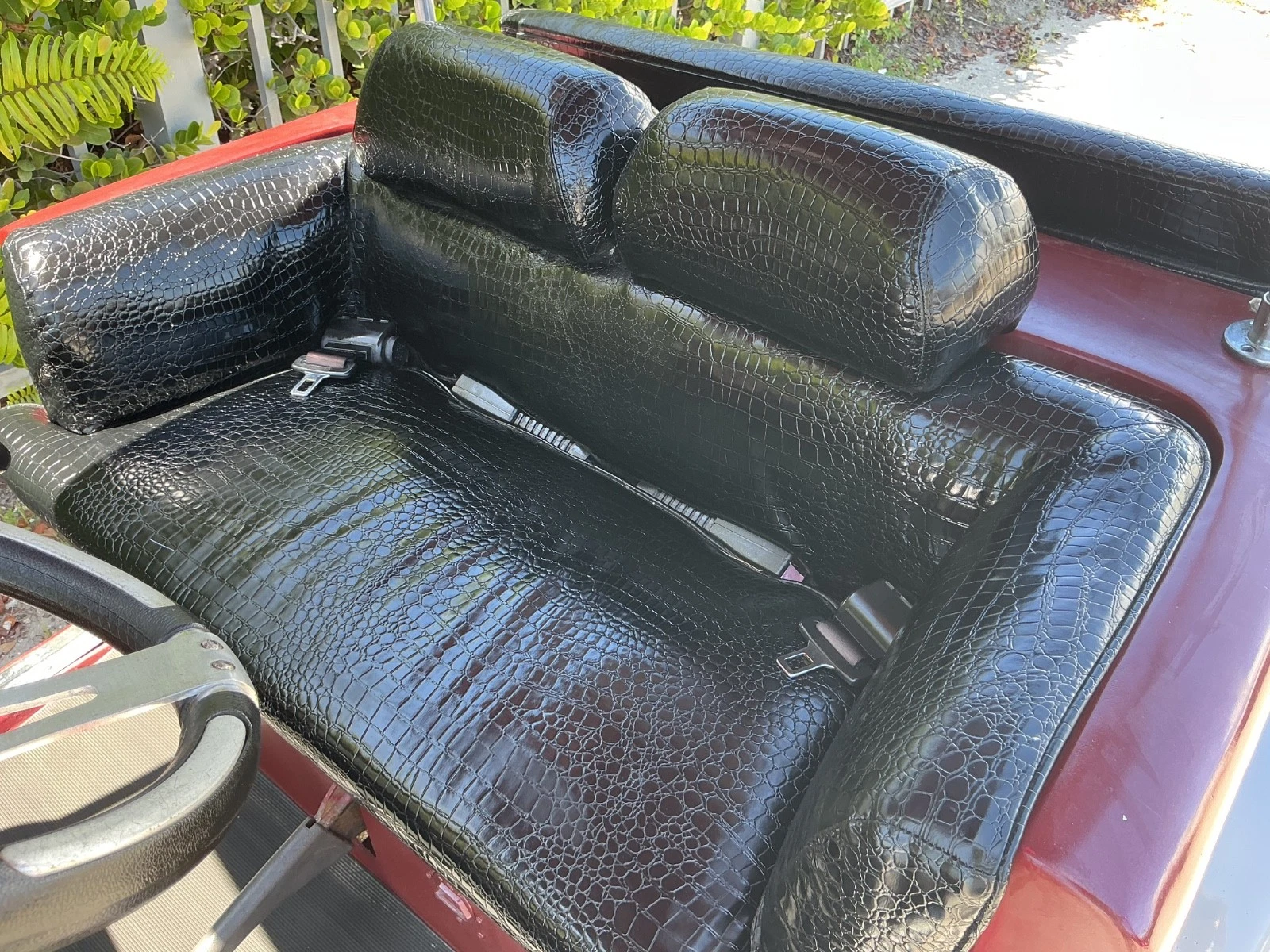
Stepping into the California Roadster is like stepping back in time. The interior is designed for two passengers (with a rear-facing “mother-in-law” seat or a full rear seat available on longer wheelbase models). The bench seat is upholstered in premium vinyl or marine-grade upholstery, often featuring diamond-tuck stitching or pleats, a hallmark of classic hot-rod interiors. The stitching is weather-resistant, allowing the cart to be parked outside or caught in a brief rain shower without damaging the interior.
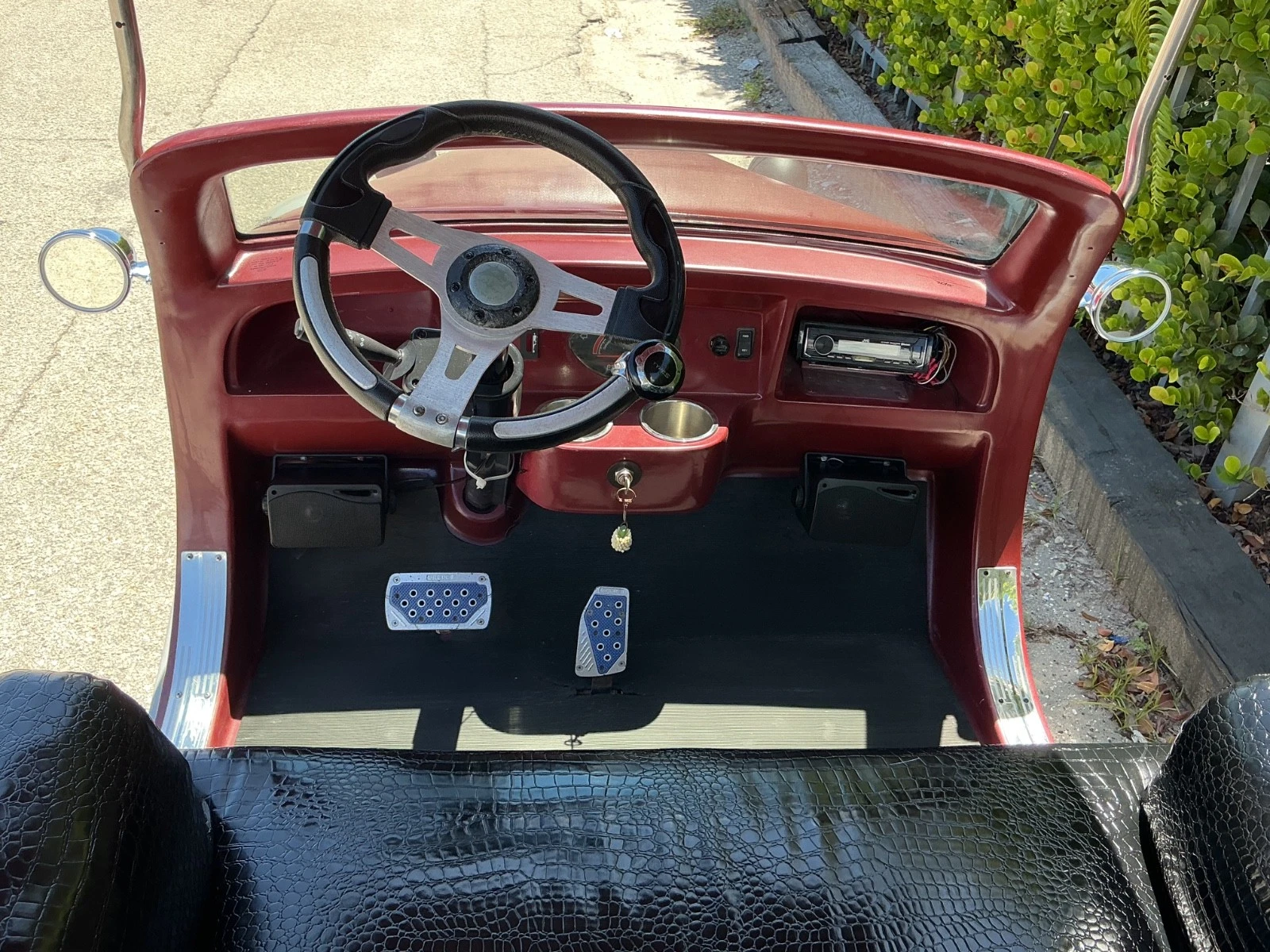
The steering wheel is a work of art in itself. It is a small-diameter, chrome-spoked wheel, often made of polished mahogany or laminated wood, giving the driver a direct connection to the golden age of motoring. It typically features a tilt mechanism, allowing for easier entry and exit—a crucial comfort feature for the demographic that most enjoys these vehicles.
The dashboard is a simple, elegant panel. A central instrument cluster houses a battery state-of-charge gauge, which is the primary information the driver needs. There may also be a voltmeter. Toggle switches, reminiscent of early aircraft, control the lights and accessories. There are no complex infotainment screens; the roadster experience is about the journey, not digital distractions. The floor is typically covered with a rubberized mat or indoor/outdoor carpeting, and the pedals—accelerator and brake—are simple, robust units.
Heart of the Matter – Technical Specifications and Engineering
Beneath the beautiful skin, the 2004 California Roadster is a highly functional and reliable electric vehicle. Its engineering is focused on simplicity, durability, and ease of maintenance.
The Donor Chassis and Drivetrain
As mentioned, the foundation is typically a Columbia P400 or similar heavy-duty chassis. This is a steel frame that provides the rigidity needed to support the fiberglass body, batteries, passengers, and suspension.
Motor: The vehicle is powered by a 3-5 horsepower (approximately) 36-volt or 48-volt DC electric motor. The 48-volt systems offer slightly better acceleration and hill-climbing ability. These are series-wound DC motors, prized for their high torque at low speeds, which is perfect for starting from a stop.
Controller: A solid-state motor speed controller acts as the brain of the system. It takes the signal from the accelerator pedal and regulates the flow of electricity from the batteries to the motor. By 2004, these controllers were highly reliable and offered smooth, stepless acceleration.
Batteries: The energy source is a bank of deep-cycle lead-acid batteries. A 36-volt system uses six 6-volt batteries wired in series. These are not standard car batteries; they are designed to be deeply discharged and recharged repeatedly. The batteries are the heaviest component of the cart, and their low placement in the chassis contributes to a stable, planted feel.
Charger: The cart typically comes with an automatic battery charger. The owner plugs the charger into a standard 110-volt household outlet. The charger monitors the battery voltage and automatically shuts off when a full charge is achieved, preventing overcharging.
Suspension and Brakes : california roadster golf cart
The suspension is designed for comfort at low speeds on paved surfaces.
Front Suspension: Depending on the specific donor chassis, the front suspension could be a leaf spring setup or an independent coil spring system. Independent suspension offers a slightly smoother ride over uneven pavement.
Rear Suspension: The rear axle is a solid live axle, located by leaf springs. This is a simple, robust, and durable design.
Brakes: Braking is handled by rear mechanical drum brakes. When the driver presses the brake pedal, cables pull the brake shoes inside the drums, slowing the vehicle. A hand-operated or foot-actuated parking brake is also standard.
Performance Metrics
Top Speed: The standard speed is governed to around 12-15 mph, which is typical for a golf course. However, with a “speed code” adjustment or the installation of a high-speed motor, the top speed could be increased to 19-25 mph, making it more suitable for NEV use in communities with higher speed limits.
Range: On a full charge, the 2004 California Roadster can travel between 25 and 40 miles. The actual range depends on several factors: the age and condition of the batteries, the terrain (hills drain batteries faster), the weight of the passengers, and the driving style.
Turning Radius: Like most golf carts, it has a surprisingly tight turning radius, making it highly maneuverable on paths and in tight spaces.
Dimensions and Weight
Length: Approximately 120 inches (10 feet)
Width: Approximately 48 inches (4 feet) – Narrow enough to fit on most golf cart paths and through standard doorways.
Height: Approximately 70 inches (with the top up)
Weight: The curb weight is around 700-800 pounds, with a significant portion of that being the lead-acid batteries.
The Lifestyle
In a place like Palm Springs, Catalina Island, or The Villages in Florida, the California Roadster is a social catalyst. It’s impossible to drive one without receiving waves, thumbs-up, and questions at every stop sign. Owners often participate in parades, golf cart rallies, and community “cruise nights.” The cart becomes an extension of the owner’s personality. They are often customized further with personalized paint jobs, upgraded sound systems discreetly hidden in the interior, and period-correct accessories.
Maintenance and Upkeep : california roadster golf cart
Maintaining a 2004 California Roadster is relatively straightforward, which is a large part of its appeal.
Battery Care: This is the single most important maintenance task. Owners must regularly check the water levels in the lead-acid batteries (distilled water only) and keep the terminals clean and free of corrosion. Proper battery care directly translates to longer range and battery life.
Tire Pressure: Maintaining correct tire pressure is crucial for range and tire wear.
Electrical System: The simplicity of the DC electrical system means that troubleshooting is often a matter of tracing wires and checking connections. Many owners learn to perform their own maintenance.
Chassis Lubrication: Greasing the suspension and steering components periodically ensures a long life for these parts.
Body Care: The fiberglass body can be waxed just like a car. The chrome parts require polishing to prevent pitting, especially in coastal environments.
Common Upgrades for the 2004 Model
Enthusiasts often seek out the 2004 model as a base for customization.
Lithium Battery Conversion: One of the most popular modern upgrades is replacing the heavy lead-acid batteries with a modern lithium-ion pack. This dramatically reduces weight, increases range, and eliminates most battery maintenance.
High-Performance Motor/Controller: For those wanting more speed and torque, upgrading the motor and controller is a common modification.
Modern Audio: Hidden Bluetooth speaker systems allow owners to enjoy music without disturbing the vintage aesthetic.
LED Lighting: Upgrading headlights and adding LED underbody lighting is popular for safety and style.
Legacy and Cultural Impact : california roadster golf cart
The 2004 California Roadster occupies a significant place in the history of personal transportation. It helped prove that electric vehicles could be desirable, emotional purchases, not just eco-friendly appliances. It paved the way for the current boom in “lifestyle” electric vehicles.
Influence on the Market
The success of the California Roadster inspired countless imitators and competitors. Today, you can buy turnkey vintage-style electric vehicles from numerous manufacturers. The “retro” golf cart segment is now a multi-million dollar industry, with builders offering everything from 1950s Cadillac-inspired hearses to 1940s Willys Jeeps. The 2004 California Roadster was a pioneer in this space, demonstrating that there was a hungry market for vehicles with soul and style.
A Collector’s Item
Today, well-preserved 2004 California Roadsters are considered modern classics. They are sought after by collectors for several reasons:
Representative of an Era: They perfectly capture the design and lifestyle trends of the early 2000s.
Build Quality: The 2004 models are often cited as having superior build quality compared to some earlier and later production runs.
Simplicity: Before the advent of complex digital displays and CAN-bus electrical systems, these carts are simple and easy to work on.
Aesthetics: The design is timeless. It doesn’t look like a vehicle from 2004; it looks like a vehicle from 1929 that has been perfectly preserved.
The Enduring Appeal
Why does a simple electric golf cart hold such appeal? In a world of increasing complexity, speed, and digital intrusion, the California Roadster offers a form of automotive escapism. It forces you to slow down. You feel the wind, you hear the whisper of the tires on the pavement, and you engage with your surroundings and the people in them. It is a vehicle that prioritizes joy over speed, style over substance (in the best possible way), and community over isolation.
The 2004 California Roadster is more than just a golf cart. It is a rolling sculpture, a conversation starter, and a time machine. It represents a successful fusion of old-world craftsmanship and modern electric vehicle technology. For those lucky enough to own one, it provides a daily dose of nostalgia and a tangible connection to the romance of the open road—even if that road is only a quiet path leading to the local coffee shop.
Conclusion : california roadster golf cart
The 2004 California Roadster electric golf cart stands as a testament to the power of design and niche marketing. It took a mundane, utilitarian platform and transformed it into an object of desire. By drawing inspiration from the classic American speedster, the California Roadster company created a vehicle that transcended its intended purpose.
Reviews
There are no reviews yet.